
High-performance computing is entering a new era. For decades, progress was largely measured by faster processors, greater memory capacity, and larger data centers. Today, however, the challenge is more complex. Artificial intelligence, scientific modeling, advanced engineering, climate research, and large-scale data analysis are demanding computing systems that can process enormous workloads while using energy and infrastructure more efficiently.
The next generation of high-performance computing will therefore depend on more than simply building faster machines. It will require tightly integrated hardware, sophisticated software, advanced networking, and increasingly intelligent approaches to managing workloads. As computing moves toward this more interconnected model, understanding the technologies driving the transition helps explain why HPC is becoming such an important part of modern innovation.
Specialized Processors Are Changing Computing
One of the most important developments in high-performance computing is the shift away from relying exclusively on general-purpose central processing units. CPUs remain essential, but many demanding workloads can be completed more efficiently when specialized processors are used alongside them. Graphics processing units, AI accelerators, and other purpose-built chips can perform highly parallel calculations at tremendous speed.
This approach is particularly important for artificial intelligence. Training and running sophisticated machine-learning models requires the processing of enormous quantities of data and mathematical operations. GPUs and specialized accelerators are designed to handle many of these calculations simultaneously, making them well suited to AI and other data-intensive workloads. Major technology companies, research institutions, and government laboratories are increasingly building heterogeneous computing environments that combine different types of processors.
The trend also extends to applications beyond AI. Scientific simulations, computational fluid dynamics, financial modeling, medical research, and engineering design can benefit from hardware optimized for particular workloads. Instead of expecting one processor architecture to handle every task equally well, modern HPC systems increasingly distribute workloads according to the strengths of different computing components.
Advanced Memory and Data Movement Matter
Raw processing power is only part of the equation. A processor can calculate information extremely quickly, but its performance can be limited if data cannot reach it fast enough. This has made memory bandwidth, latency, and data movement central concerns in the design of modern high-performance systems.
High-bandwidth memory technologies are helping address this challenge by allowing processors to access large volumes of information more quickly. At the same time, chip designers are exploring advanced packaging techniques that place computing and memory components closer together. These approaches can reduce the distance data must travel and improve overall system efficiency.
Interconnect technology is equally important. Large HPC systems contain thousands of computing components that must communicate continuously. Faster networking and specialized interconnects allow these components to exchange information with less delay. This is especially significant for distributed AI workloads, where computing tasks may be spread across many accelerators and servers. The ability to move data efficiently can ultimately be just as important as the ability to calculate it.
Read: Best Strategy to Get a Loan to Study Overseas Approved Fast in 2026
Energy Efficiency Is Becoming a Core Requirement
The growth of computational demand has created a practical challenge: performance cannot increase indefinitely without considering power consumption. Large data centers already require substantial electricity and sophisticated cooling infrastructure, making energy efficiency an increasingly important design objective for both commercial and scientific computing.
Modern HPC development is consequently focused on performance per watt rather than performance alone. More efficient processors, improved cooling systems, power-aware software, and better workload scheduling can help organizations obtain greater computational output from available energy resources. Industry researchers and major computing institutions increasingly treat energy efficiency as a fundamental part of system architecture rather than an optional improvement.
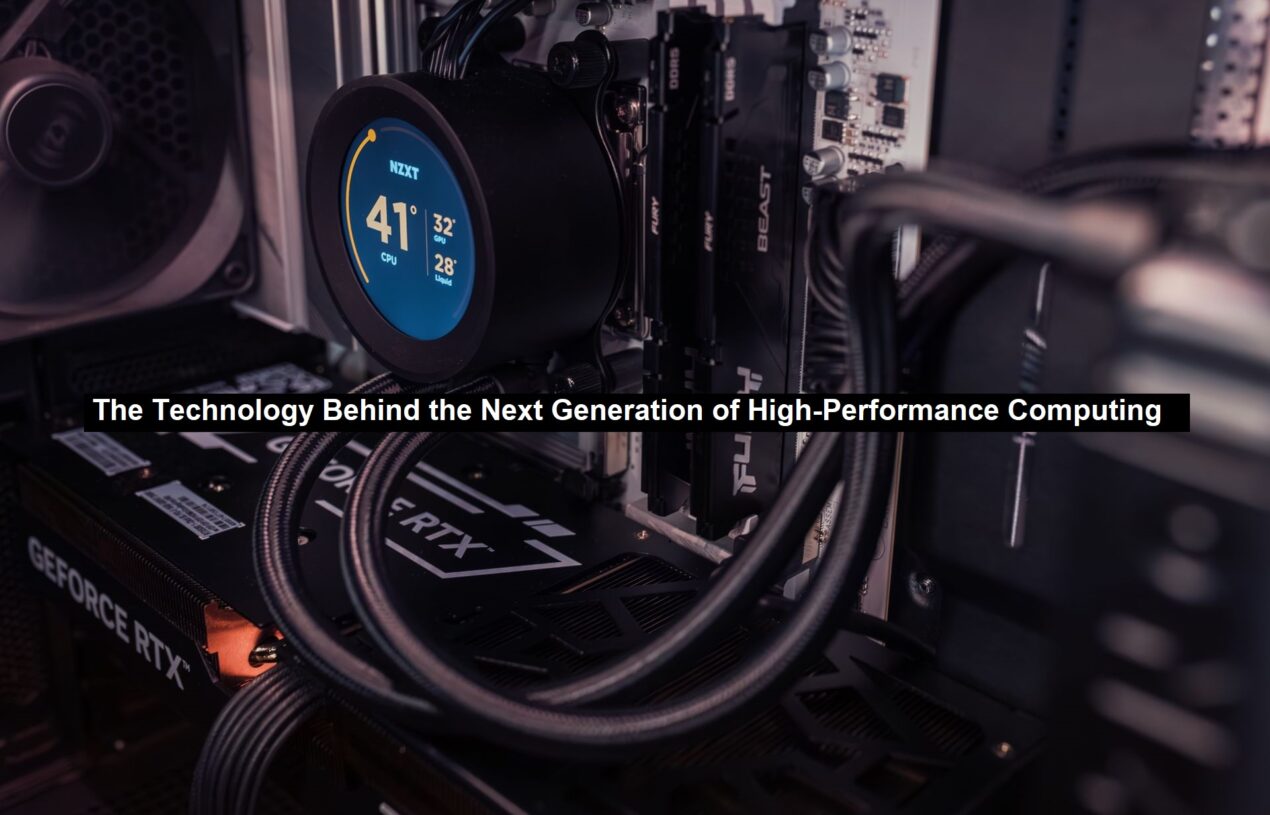
Cooling technology is also evolving. Traditional air cooling remains widely used, but liquid cooling is becoming more relevant as processors generate greater heat densities. Direct-to-chip liquid cooling and related approaches can remove heat more efficiently from high-performance hardware. These developments are important because thermal management can determine how densely computing equipment can be deployed and how consistently it can operate.
AI Is Accelerating the Evolution of HPC
Artificial intelligence is both a major consumer of high-performance computing and a force influencing its future design. Training large models requires immense computational resources, while deploying those models efficiently requires fast inference, high memory bandwidth, and reliable networking. As AI applications expand, HPC architectures are adapting to support these requirements.
The connection between AI and traditional scientific computing is also becoming stronger. Researchers can use machine-learning techniques to accelerate simulations, identify patterns in complex datasets, and improve computational models. At the same time, established HPC techniques such as parallel processing and distributed computing are helping AI systems operate at greater scale.
This convergence is creating demand for flexible infrastructure capable of handling different workloads without wasting resources. Organizations increasingly need systems that can support conventional simulations, analytics, and AI workloads within the same broader computing environment. For investors and technology observers evaluating companies involved in emerging computing markets, understanding this broader infrastructure trend can provide useful context when researching opportunities such as RGTI stock.
Conclusion
High-performance computing is becoming a foundation for some of the most demanding technological and scientific applications of the coming years. From artificial intelligence and drug discovery to engineering simulations and large-scale data analysis, organizations increasingly depend on computing systems that can deliver greater performance without creating unsustainable demands for power and infrastructure.
The most important developments will therefore occur across the entire computing ecosystem. Companies and institutions that successfully combine specialized hardware, efficient memory, rapid networking, capable software, and effective thermal management will be better positioned to meet rising computational demands.